Evacuation
Principles & Practices
WUI Culture
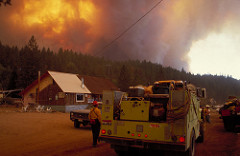
In fire-based ecosystems, its not a question of if there will be a wildfire, but a matter of when.
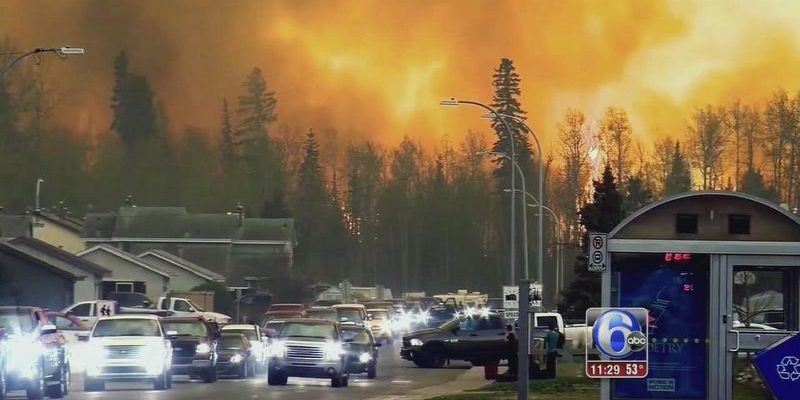
Wildfire can occur anytime—you may be at home, at work, or sleeping. And there may be very little warning. Wildfires can move at incredible speeds, often generating their own weather. High winds, heat, dense smoke, and flying sparks and embers are common. And then there is the noise, which can be completely unnerving and cause panic.
Homeowners living in the wildland/urban interface (WUI) need to be prepared to evacuate themselves, their pets, and their livestock. Once evacuation orders are given, it is vitally important to leave early. 60 percent of lives lost to wildland fire occur when people choose to "wait and see."
In this section you will learn how to plan for an emergency evacuation as well as what to do:
- in the event of a wildfire.
- evacuating pets & animals.
- if you get trapped.
- when returning home.
Emergency Evacuation Planning
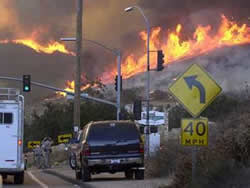
Leave before its too late - nothing you own is worth a life.
Keeping your family and pets safe in the event of a wildfire is similar to many disaster evacuations - its all about having a good plan. Like many natural disasters, wildfires are unpredictable. Plan for and rehearse evacuation well ahead of time and include your neighbors, a joint procedure and alert system can save time and lives. Post your Emergency Evacuation Plan in a prominent location.
Know who to call. Know your fire protection district. Post its number by all telephones, and program it into all cell phones. Gather contact information for prearranged meeting locations and neighborhood/school phone trees. Program these numbers into all cell phones.

Post a list of contact information and evacuation activities in a prominent place.
Prepare children too. Show children where phone numbers are posted and how to use them on a cell phone. Make sure they know where to go. Most schools have an evacuation plan. Become familiar with it before fire season.
Designate emergency contacts. Choose people off-site, and program their numbers and addresses into all family phones.
Have a way to get out. Maintain two escape routes in case one is not passable.
Have a place to go. Make arrangements for a place to go. This is where everyone in your household will go if you are not together. Make sure everyone knows how they will get there.
Prepare an emergency kit. Your kit should be packed and easy to access. It should include:
- Prescription medicines, medical equipment, and important medical records.
- Food and water for three days for each person.
- Baby supplies, including special food, sanitary items, and play items.
- Pet supplies, including medications, food, leashes, collars with tags, and carriers.
- Toilet articles (soap, toothbrush, toothpaste, shampoo, etc.)
- Clothing for several days. Include socks, boots or close-toed shoes, long-sleeved shirts, and long pants. You might want to add leather gloves, a bandanna, and a hat.
- Blankets, pillows, and towels.
- A battery-powered radio.
- Flashlights and batteries.
- Phone chargers and batteries.
Make a list of what you want to take with you. List important documents and valuables and place them where they are easily accessible. Have containers ready to pack items into. Items to include are:
- Identification, driver’s license, cash, debit and credit cards.
- Cell phones.
- Wills, living wills, powers of attorney, insurance policies, contracts, deeds, stocks, bonds, and tax returns.
- Passports, social security cards, immunization records.
- Bank account numbers.
- Credit card account numbers and companies.
- An inventory of household goods—pictures are best.
- Photo albums.
- External hard drives.
- Important phone numbers/address book.
- Family records (birth, marriage, death certificates).
Plan for animals too. Make arrangements for the evacuation of pets and livestock. Find out if your county has an evacuation plan for animals. If not, ask your veterinarian where to take pets and/or livestock. Livestock may need to shelter in place. See If You Get Trapped (linked at left) for more information on how to save lives when sheltering in place.
Keep a fire extinguisher and fire tools accessible at all times. A shovel, rake, ladder, and 100 feet of attached garden hose can be used to extinguish spot fires. Protect yourself. Wear leather gloves, sturdy boots, and wool or cotton clothing.

Contact Us
Mike Ward, Executive Director
director@idahofirewise.org
PO Box 220
Kooskia, ID 83539
EIN 27-2535008
Our Partners